Cement Plant Fire Damage: 30 Electrical Cabinets Restored in 7 Instead of 10 Weeks

Production Restarted Three Weeks Ahead of Schedule
Following a fire in the electrical room of a cement plant, 30 electrical cabinets were affected by soot, smoke residues, and thermal exposure. The original target was to restore operations within ten weeks. Through a structured restoration and recovery process, production resumed after just seven weeks, allowing the facility to return to operation three weeks ahead of schedule.
Limited Spare Parts Threatened a Prolonged Shutdown
The fire not only caused visible contamination but also left behind corrosive combustion by-products that can lead to insulation failures, corrosion, leakage currents, and latent equipment defects. At the same time, critical replacement components were subject to long procurement lead times. A complete replacement of the affected cabinets would have significantly extended the production outage.
Immediate Stabilization Prevented Further Damage
Emergency measures were implemented immediately after the incident to stabilize the affected area and minimize additional damage. The primary objective was to prevent corrosion, electrical tracking, and further degradation of sensitive electrical components.
Restoration and Technical Assessment Instead of Replacement
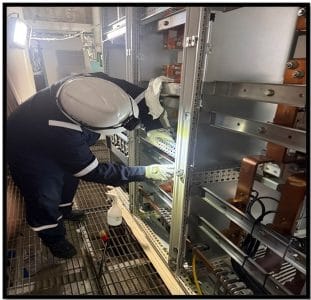
The affected electrical cabinets and components underwent a comprehensive cleaning and decontamination process in accordance with recognized industry guidelines, including DGUV and VdS 2357 standards. Protective preservation measures were then applied to safeguard sensitive equipment.
This was followed by a structured inspection and recovery program, including visual assessments, insulation resistance testing, functional checks, and evaluations of thermal and mechanical damage. All findings were documented in detailed inspection reports to support quality assurance and communication with insurers and technical experts.
Rebuilding and Testing the Electrical Cabinets
Eight specialists worked in a two-shift operation to accelerate the recovery process. Services included the inspection of busbars and power distribution systems, as well as testing of electronic and electromechanical components for thermal stress, mechanical damage, and functional integrity.
The restoration concluded with the rebuilding of the 30 electrical cabinets, comprehensive electrical testing, commissioning checks, and the delivery of complete project documentation.
Reduced Downtime and Lower Risk of Secondary Damage
By combining rapid stabilization, professional decontamination, technical assessment, and targeted restoration, the affected electrical cabinets were successfully returned to service without relying on difficult-to-source replacement parts.
The approach significantly reduced the risk of secondary damage caused by corrosion, fire residues, or hidden functional defects while shortening the overall interruption to plant operations.
Result: The cement plant resumed production after only seven weeks, achieving full operational recovery three weeks earlier than originally planned.