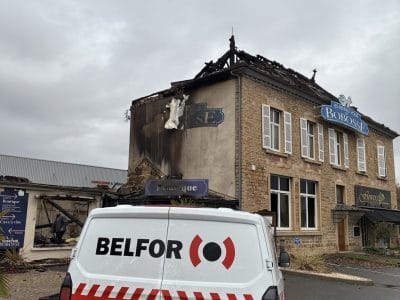
Fire Damage Restoration: Securing a Home with an Asbestos-Containing Roof
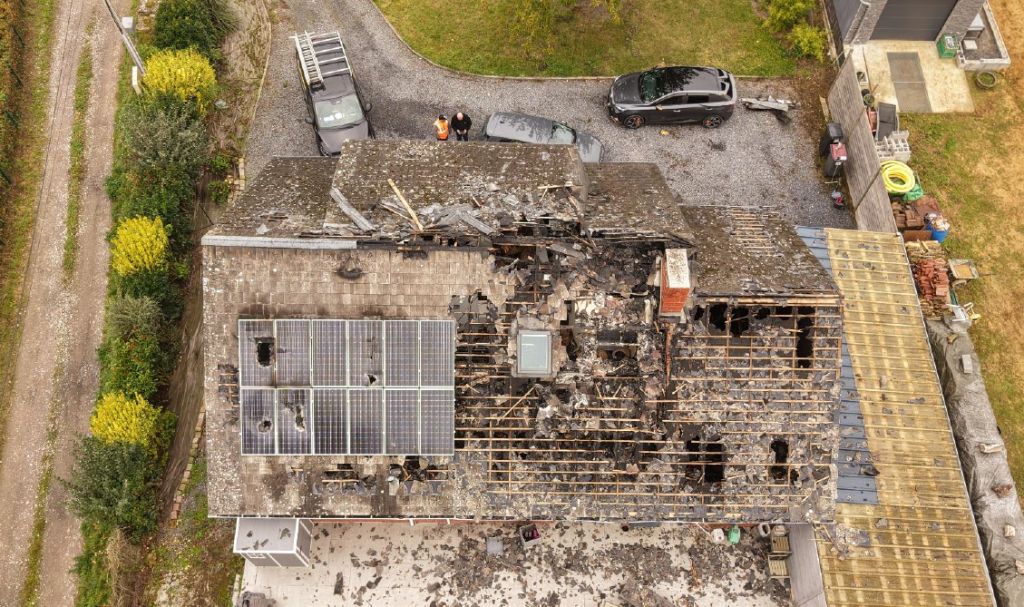
After a fire severely damaged the asbestos-containing roof of a home near Maubeuge, France, BELFOR France secured the building against rain and further deterioration. Despite Storm Austen interrupting the emergency works, the team adapted the approach and completed the temporary protection on 31 October 2026.
Fire damage left the asbestos-containing roof exposed
In October 2026, a fire affected a detached home near Maubeuge in northern France. The roof, constructed with asbestos-containing fibre cement, was heavily damaged by the fire.
The weakened structure created two immediate risks. Rainwater could enter the building and cause additional damage, while damaged roofing materials could release asbestos fibres. Emergency protection therefore had to combine weatherproofing with strict asbestos safety procedures.
Emergency fire damage restoration under asbestos conditions
BELFOR’s Lille team began work on 19 October. The objective was to install temporary weather protection while managing the asbestos risk in accordance with the required procedures.
Trained technicians used thermal tarpaulins (shrink wrapping) to make the roof watertight and contain the damaged asbestos-containing materials. This helped prevent further water ingress and limit additional damage while the property awaited permanent repairs.
Three BELFOR specialists were initially scheduled to complete the work within five days.
Storm Austen required a change of approach
During installation, Storm Austen hit the region and forced the team to suspend the work.
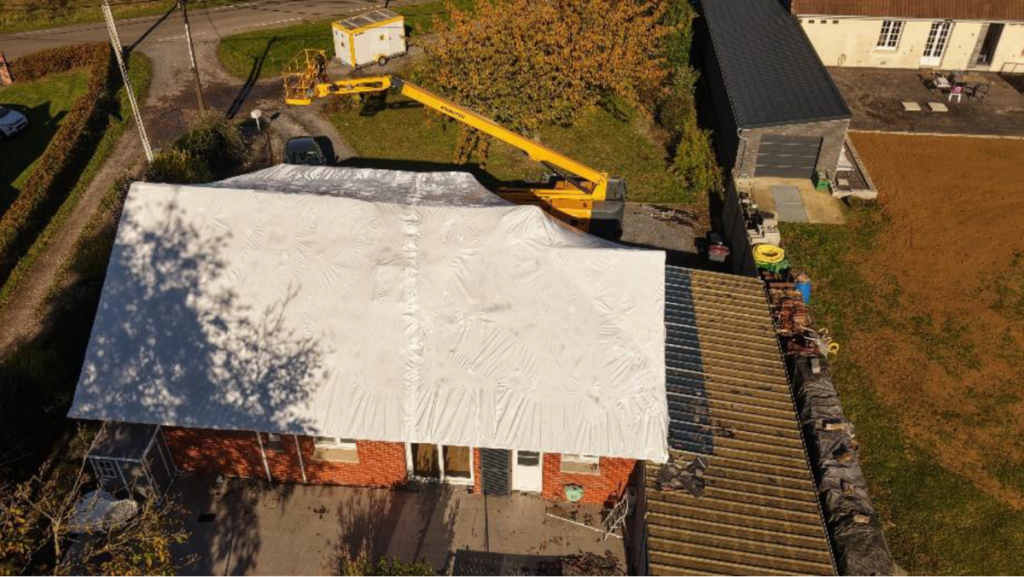
Once conditions permitted, BELFOR returned with rope-access technicians trained to work in environments involving asbestos. A cable was tensioned around the building to provide a secure anchoring system, allowing the protective tarpaulin to be completely reinstalled and firmly secured.
The property was secured until permanent repairs could begin
The two-stage intervention was completed on 31 October 2026. The building was left protected against the weather, the damaged asbestos-containing materials were contained, and the risk of further deterioration was reduced.
The case shows why fire damage involving asbestos requires more than standard emergency covering. Effective restoration depends on combining rapid weather protection, specialist asbestos procedures and the ability to adapt the technical solution when conditions on site change.