Fire at Battery Manufacturing Facility in Korea: Fast Restoration Reduces Downtime and Saves 71% in Costs
Case study from the archive · First published in 2015
After a fire in a Korean lithium-ion battery manufacturing facility in November 2015, BELFOR restored critical production equipment within 28 days, enabling the policyholder to return to business quickly while reducing recovery costs from an estimated US$880,000 to US$260,000. Business interruption was kept to a minimum because restoration replaced large parts of costly equipment replacement.
Incident Overview
On November 22, 2015, at approximately 8:30 PM, a fire broke out inside a battery cell testing equipment cabinet at a facility located about 100 km south of Seoul. The site focuses on the design and manufacturing of lithium-ion polymer cells and battery packs used in automotive, robotics, and mobile communication devices.
The fire was quickly extinguished by in-house personnel and the external fire brigade. While the flames were controlled rapidly, the incident caused significant contamination and damage to sensitive production equipment.
The Business Priority: Minimizing Downtime
The priority for the policyholder was clear from the beginning. Production needed to resume as quickly as possible to avoid prolonged operational disruption and financial loss.
The day after the incident, a Korean loss adjuster instructed BELFOR Korea to conduct an initial site damage assessment. The goal was not just to understand the damage, but to identify the fastest and most effective recovery strategy.
Assessment and Technical Findings
BELFOR carried out a prompt and detailed assessment of the affected equipment. The analysis showed that, beyond localized thermal damage at the seat of the fire, the main issue was contamination.
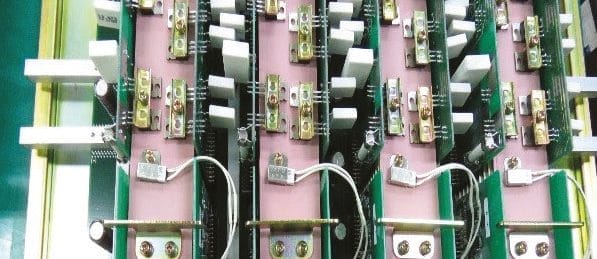
Fire extinguisher powder and soot had spread across equipment surfaces. Visible staining on metal components indicated a high risk of corrosion if not treated quickly. This type of contamination is critical because it can lead to progressive deterioration and eventual equipment failure.
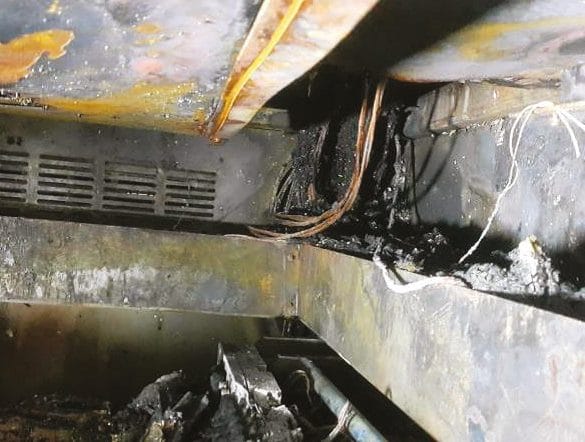
The assessment also identified the hygroscopic nature of fire extinguisher residues. This means the residues attract moisture from the air, which can cause electrical faults or intermittent power failures in sensitive electronic systems. In addition, soot and chlorine contamination required immediate neutralisation to prevent long-term damage.
These findings were clearly explained to the policyholder, enabling a fast and informed decision in favour of restoration rather than replacement.
Restoration Under Time Pressure
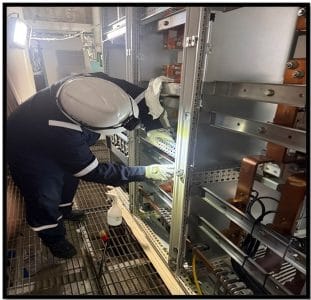
BELFOR was given a strict deadline of 28 days to complete the recovery of 70 cell battery tester units and 4 monitoring systems. This timeline reflected the urgency of restarting production and minimizing business interruption.
BELFOR mobilized sufficient resources immediately to meet this non-negotiable schedule. The project was managed end-to-end by the BELFOR Korea team, ensuring that all phases of the recovery were tightly coordinated and executed without delay.
Throughout the project, communication between BELFOR, the policyholder, and the loss adjuster remained clear and consistent. This transparency enabled quick decisions and ensured that the recovery process stayed on track.
Restoration Outcome
Of the 70 battery testing units, 8 were classified as total losses due to the severity of damage. The remaining equipment was successfully restored within the required timeframe.
The restoration work was completed on schedule, meeting the policyholder’s operational requirements. The performance of the recovered equipment met expectations, confirming the effectiveness of the restoration approach.
Business and Financial Impact Minimized
The total cost of recovery amounted to US$260,000, compared to an estimated US$880,000 for full equipment replacement. This resulted in a 71% cost saving.
More importantly, the fast and structured restoration significantly reduced downtime. By avoiding lengthy procurement and installation processes, the policyholder was able to resume production much sooner.
Lessons for Business Owners
This case shows that in industrial environments, damage is not only about what is visibly destroyed but also about hidden contamination risks that can lead to long-term failure if not addressed properly.
A rapid technical assessment, combined with clear decision-making and disciplined execution, makes it possible to restore operations faster and more cost-effectively.