Fire Damage: BELFOR Restores Flour Mill in Düsseldorf Harbour
Case study from the archive · First published in 2011
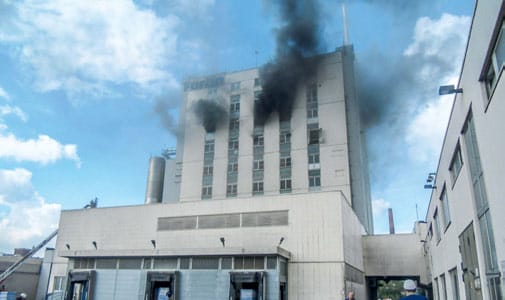
Visible impact: the Fortin mill after the extinguishing operations.
After a fire at the Fortin flour mill in Düsseldorf Harbour, BELFOR Germany restored damaged machinery and contaminated production areas. The team removed soot, water and product residues, protected equipment from corrosion and worked closely with the authorities to meet hygiene standards. Thanks to the fast restoration work, the mill was able to return to full operation.
The Fortin mill can be seen for miles around in Düsseldorf harbour and is one of the tallest buildings on the large site downriver of the bend in the Rhine. Designed as one of the most cutting-edge mills in Europe, the plant was built using the latest technical expertise in the course of the construction of the new state parliament building. Since its completion, the new plant has been producing hulling mill products such as foodstuffs made of oats, wheat, maize and rye, including flakes for the bread and cereal industry. However, the company itself dates back a lot further. This August, it will celebrate its 80th anniversary. Unfortunately, the anniversary fireworks came almost a year too soon.
A MINUSCULE TRIGGER
In September last year, smoke suddenly rose from the 5th floor of the Fortin mill on Fringsstraße. By the time the fire brigade arrived, the flames had already reached the 6th floor. To reach all the hot spots, the fire fighters had to open up the plant. The extinguishing operations proved difficult, due in part to the size and rambling nature of the production plant which extends over ten storeys and two basement levels. Meanwhile, there was also a danger of the fire spreading. Due to the intense heat at the source of the fire, relief units had to take over continuously.
With such intensive deployment, it is understandable that a lot of damage occurred, including sooting of the building, corrosion of the equipment by extinguishing water and chemical pollution of all the production facilities. Fortunately, the proportion of overall damage was small. However, for a company that depends on impeccable hygiene in the food-producing area, this damage was certainly considerable. Like most fires, the actual cause was pretty banal. A small metal part that had lodged between the rollers began to smoulder, then fell into the air-bed dryer where it ignited the product residues. The fire then spread from the dryer to the cable lines.
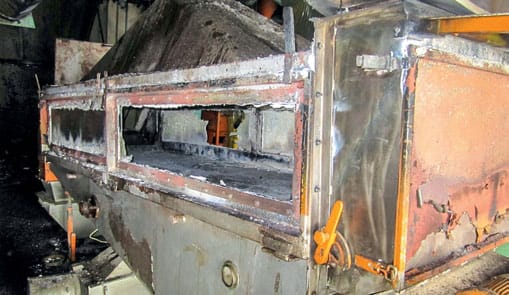
The disaster took place in this air-bed dryer.
HAND IN HAND WITH THE AUTHORITIES
BELFOR introduced initial measures immediately despite it being a weekend. The remaining extinguishing water was siphoned off, damp product residues removed, access routes cleared, and initial corrosion protection applied. Since production business was affected, the restoration work was naturally extremely urgent. Obligations to deliver to important trading partners had to be honoured. At the top of the list of priorities, however, was restoring optimum hygiene for production in the food-producing area.
The chemical survey report brought to light a high level of chloride surface pollution. Right from the outset, therefore, the food regulatory authorities of the consumer protection agency of the City of Düsseldorf were included in the restoration plans and their expertise incorporated. Everything needed to happen quickly, but without impairing the previously exemplary quality of the Fortin mill’s products.
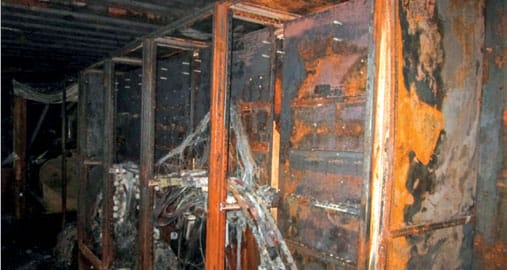
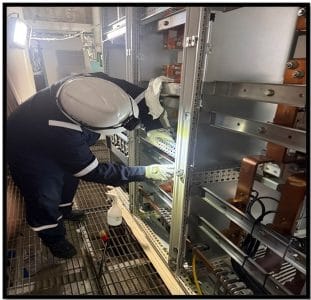
The control cabinet for controlling the system burnt out completely.
HEAVY MACHINERY AND REAL HANDS-ON WORK
BELFOR began the restoration work while corrosion protection was ongoing. Completely ruined sections of machinery were dismantled and removed from the upper storeys using a truck-mounted crane, which was also used to take out machines for repair. Other machines were dealt with on their respective floors. At the same time, all product residues were removed from the process lines in the internal area, and cables, cable lines and control cabinets dismantled. The residues were removed from the building surfaces using various application techniques, including the soot removal process.
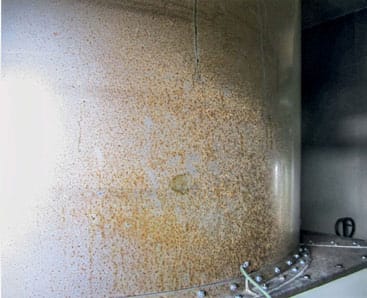
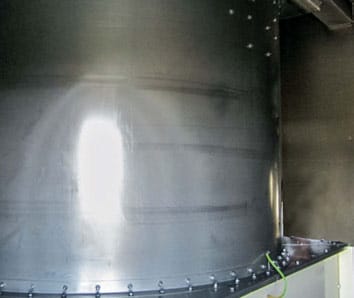
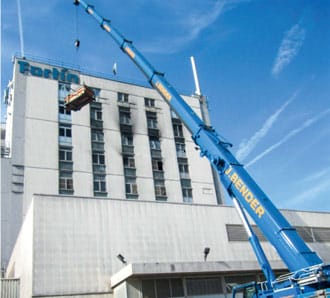
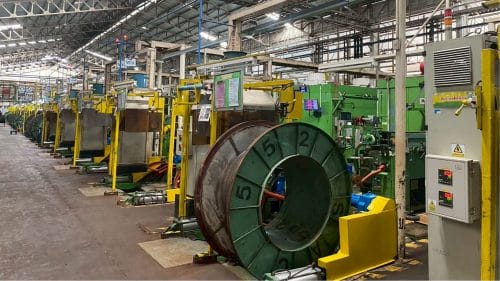
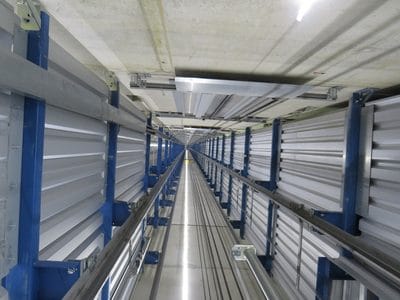
Stainless steel containers before and after restoration. (pictures left and middle) / Removal of machines by crane. (picture right)
For the groat cutter and other mill-specific plant components, Fortin and BELFOR developed a joint solution with the manufacturers, which allowed them to work efficiently hand in hand. Some of the machine repair work could be carried out directly at the manufacturers’ premises. Some residues could only be removed by hand with cleaning pads. But the work was to pay off ultimately, because the delivery deadlines were largely met and the Fortin mill resumed full operation in January of this year. That should really set the company’s 2012 anniversary celebrations alight.