Innovative Soot Removal Method Saves Glassworks Factory Weeks of Downtime After Fire
Case study from the archive
Development of innovative processes and techniques is an integral part of BELFOR. A new restoration procedure, which opens up a whole host of new possibilities and applications, is the decontamination and cleaning of surfaces with latex film. Originally developed to clean monuments, extensive development and testing has resulted in an excellent product that provides a cost effective solution for soot decontamination from walls, ceilings and similar surfaces. This innovative method was to prove the best option for Barloworld Scientific Limited following a fire at their laboratory glassware production facility in Stone, Staffordshire
FIRE IN A GLASSWORKS
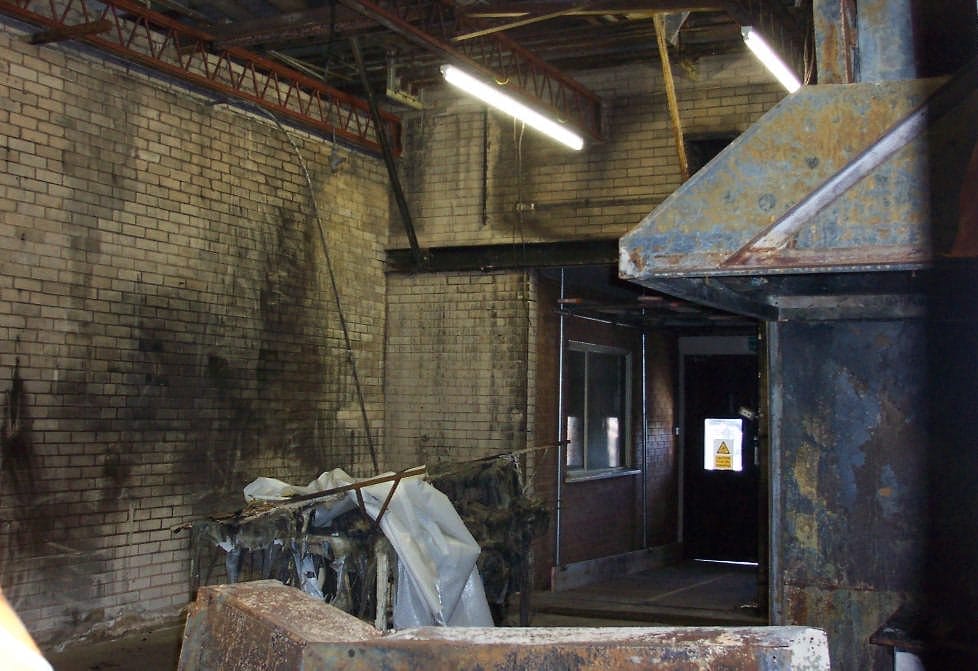
The fire started in the ‘acid room’ – a brick built workshop within the main production area housing heated baths of acid, used since the 1960’s for precision processes such as glass etching. The room had a suspended ceiling, made from fire retardant asbestos, which was an immediate concern for the Fire Brigade and the Health and Safety Executive due to the possible release of asbestos fibres through the smoke. The senior management of Barloworld Scientific were on site within 30 minutes of the fire breaking out, and immediately activated the company’s disaster recovery plan. After the blaze was extinguished the full extent of the damage could be seen.
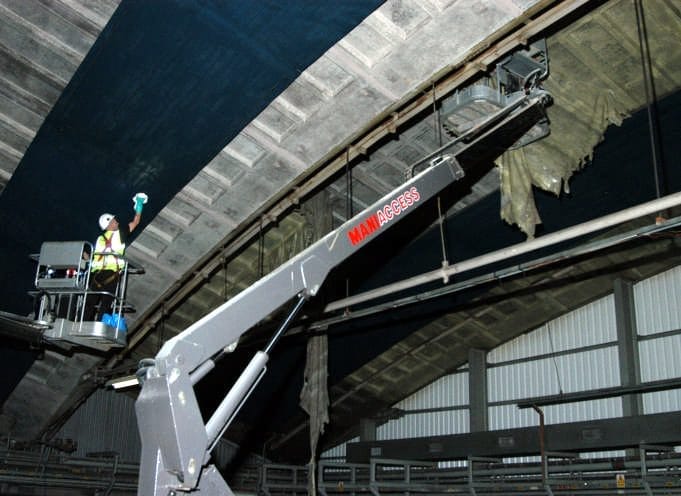
The fire was largely contained in the ‘acid room’ but most of the suspended ceiling was destroyed, allowing the smoke to penetrate into the main factory roof area, measuring approximately 8,500 sq ft. A thick layer of heavy black soot was left on all surfaces, including walls, floors, machinery, and the finished goods that were awaiting despatch. BELFOR were appointed by loss adjusters GAB Robins, and following a site inspection and a risk assessment, swab samples were commissioned to identify the extent of the contamination and, crucially, whether the asbestos fibres had spread.
The swab samples returned negative, allowing production to resume much more quickly. If the results had been positive, more tests would have been required; costing both the company and the insurer more in lost revenue and operations costs. BELFOR were in constant discussions with, and working alongside, several external contractors to ensure the premises were safe before any remedial works could commence. BELFOR’s Contracts Manager was in charge of the recovery operations and liaised with a number of specialists, including an environmental testing company, air sampling contractors, structural engineers, and a specialist scaffolding company.
INTRODUCING: THE BELFOR SOOT REMOVAL FILM
The factory had an unusual concave concrete roof structure designed to maximise the amount of natural sunlight into the building. SRF latex was therefore selected to decontaminate the ceiling, as it was the ideal procedure for this job. Not only was it more effective than traditional ‘wet washing’ methods, but also it would enable manufacturing to resume more rapidly and therefore a much quicker recovery for the client overall.
The Soot Removal Film (SRF) could be applied, with access via mobile aerial platforms, and the machinery, with protective coverings, could remain in-situ, ensuring that daily production would not be affected. As the procedure is almost water free, there is no further penetration of chloride into the concrete, no draining of cleaning agents, and only minor job preparation compared to water based methods.
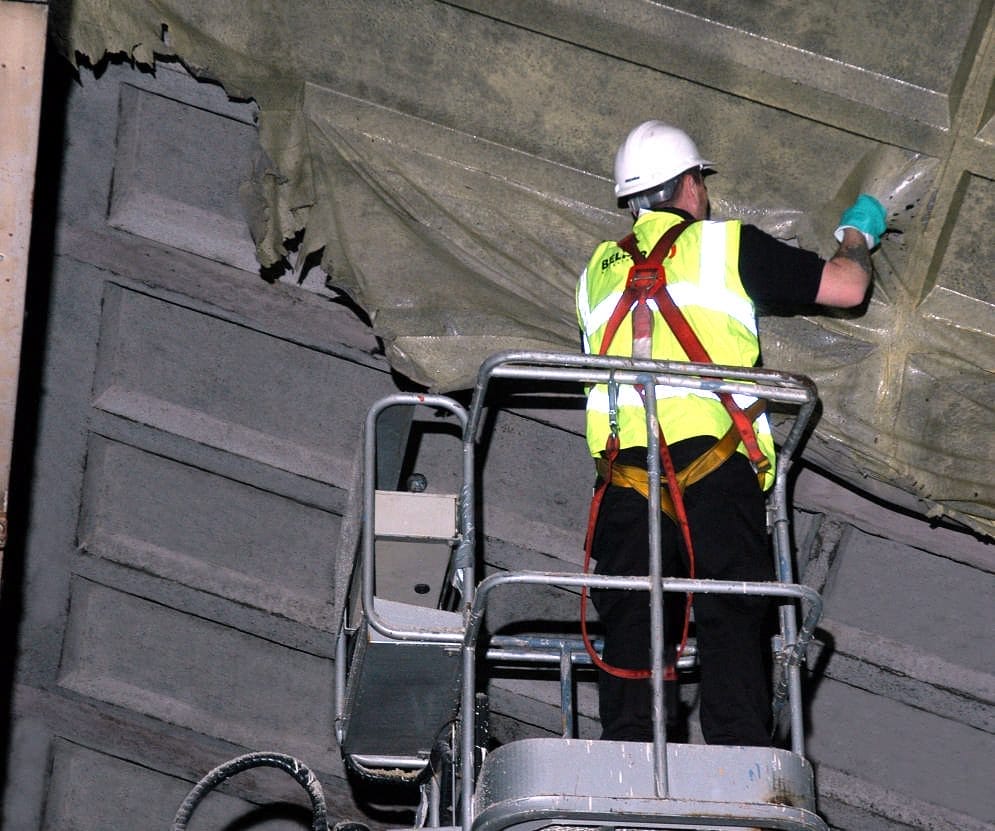
The SRF product can be easily sprayed onto the affected area and left to dry. When the film is dry, peeling can be started and the latex film is removed together with the contamination. The dried latex film can then be disposed of as normal waste, providing the contamination from the fire contains no hazardous substances.
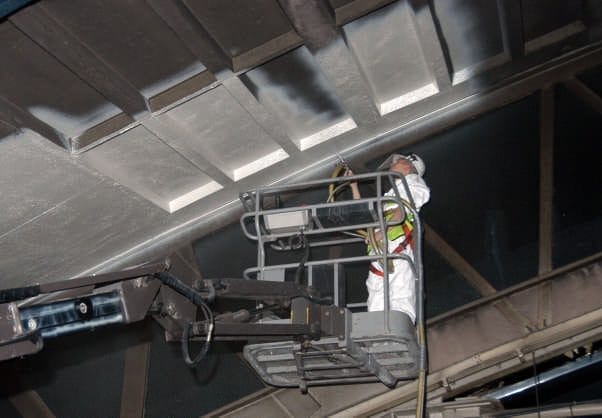
The management of Barloworld Scientific, and loss adjusters GAB Robins, agreed that this would be the preferred method. A team of specially trained technicians worked for a period of 15 weeks with the latex film on the whole of the factory ceiling, with impressive results that could be seen immediately.
STAFF INVOLVMENT
The employees of Barloworld Scientific had recently carried out a full factory clean at the facility, but the decontamination of the affected machinery, finished goods, and the majority of the building required specialist knowledge and safe application of decontamination procedures. Under a special arrangement it was agreed that experts from BELFOR would train and supervise their staff, and there was no shortage of volunteers, with over 100 people willing to help.
BELFOR’s Contracts Manager arranged the volunteers into teams and, after ‘Toolbox Talks’ and health and safety training, they were issued with personal protective equipment (PPE) before starting work. Under BELFOR’s supervision the teams worked over a two-week period to decontaminate the entire glass equipment area of the factory.
The science equipment area of the factory, which had been shielded from most of the damage by a partitioning wall that separated it from the rest of the factory, also suffered damage, but the smoke contamination levels were much lighter. Subsequently, after only 2 days of decontamination measures, manufacturing could resume in this area.
Mike Bratt, General Manager at Barloworld Scientific praised BELFOR ‘s work:
“The response from BELFOR was consistently professional and toan exceptional standard. Their involvement, from management meetings to the training and supervision of our staff, was always outstanding. BELFOR worked around our requirements, with no disruption to our operations, and were instrumental in the speed in which our factory production could resume full operations.”